Greek Oregano vs Italian:
Why the Difference Matters
for Inflammation
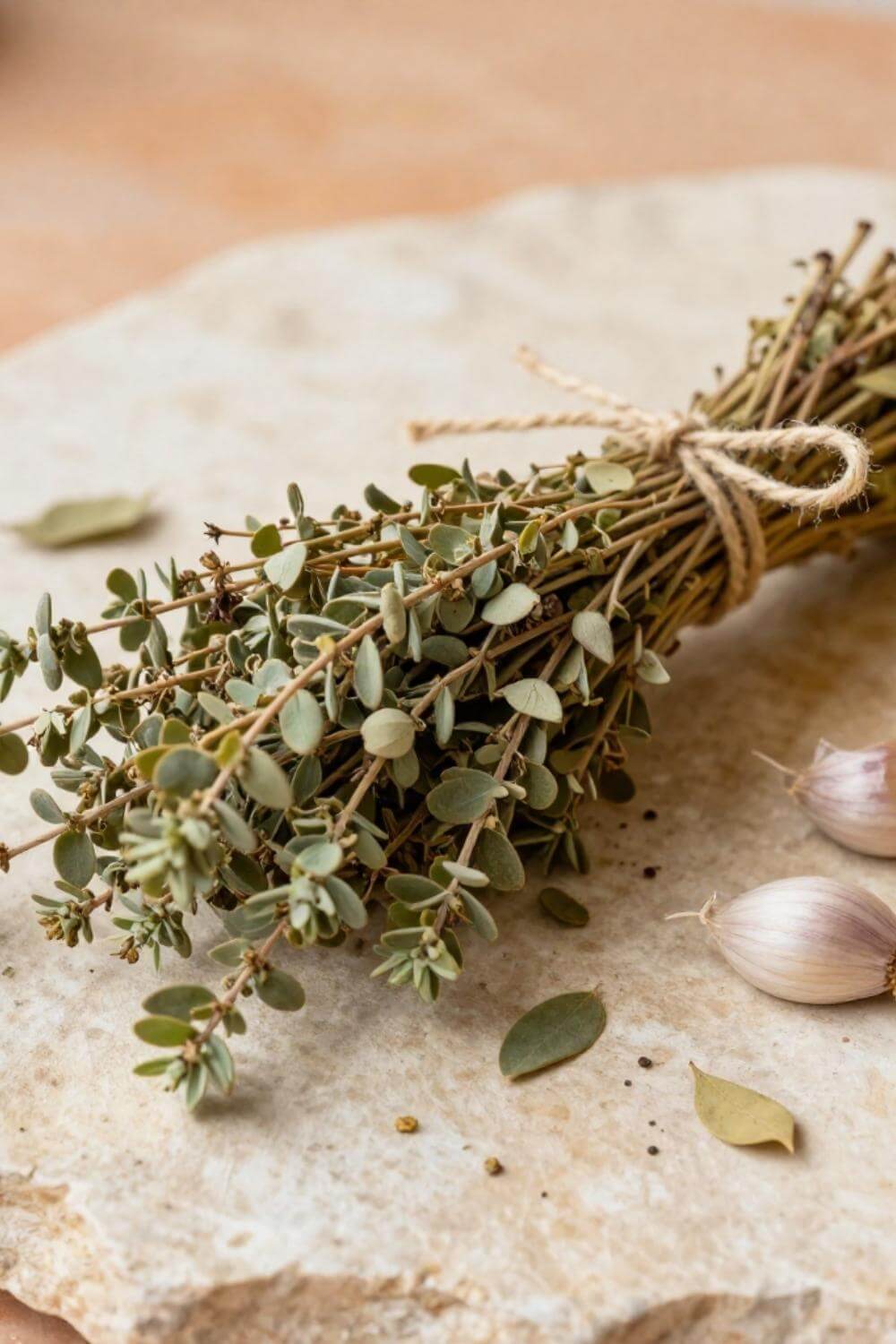
I grew up in Poland, not Greece. My grandmother’s spice drawer had no oregano at all. So when I started cooking Mediterranean keto and reached for that green jar on the supermarket shelf — the one just labelled “oregano” — I had no idea I was using the wrong thing.
It took me an embarrassingly long time to understand that the herb most people in non-Mediterranean countries know as oregano is not what Greek cooks mean when they say oregano. The flavour is milder, the aroma is different, and — critically for what we’re doing with this diet — the anti-inflammatory compound content is significantly lower.
The word oregano itself comes from the Greek: oros, meaning mountain, and ganos, meaning joy. The Greeks named it after their mountains. That’s not an accident — it grows wild in the rocky, sun-baked highlands of Greece, and those harsh conditions are precisely what drives the concentration of its active compounds.
The short versionGreek oregano (Origanum vulgare subsp. hirtum) has a significantly higher concentration of carvacrol — the compound responsible for its anti-inflammatory effects — than Italian oregano or standard supermarket varieties. Most people are cooking with a milder, less potent herb and don’t know it.
What Carvacrol Does
and Why It Matters
Carvacrol is a phenolic compound — the primary active component in oregano’s essential oils. It’s what gives Greek mountain oregano its sharp, almost medicinal intensity. And it’s where most of the herb’s therapeutic reputation comes from.
In terms of inflammation specifically, carvacrol works by reducing the expression of two key inflammatory markers: IL-1β (interleukin-1 beta) and COX-2 (cyclooxygenase-2). COX-2 is the same enzyme that common over-the-counter anti-inflammatory drugs like ibuprofen target. It’s part of the prostaglandin pathway — the signalling chain your body uses to generate and sustain inflammatory responses.
When carvacrol suppresses COX-2 expression, it doesn’t block the pathway the way a pharmaceutical does (which is why it’s gentler on the gut). Instead, it reduces the upstream signal — the instruction to produce the inflammatory proteins in the first place.
For a keto Mediterranean diet — where the goal is specifically to use food to reduce chronic low-grade inflammation — this difference matters. You’re not going to get meaningfully different results from one meal. But as a herb you use almost daily, scattered over everything from salads to roasted fish to marinades, the cumulative effect of consistently using a higher-carvacrol variety adds up.
The Gut Connection
There’s a secondary benefit worth mentioning, especially for anyone in this community dealing with gut-related anxiety. Carvacrol has shown antibacterial activity against several strains of gut bacteria associated with digestive disruption — including some linked to SIBO (small intestinal bacterial overgrowth), a condition that frequently co-occurs with anxiety and hormonal imbalance.
In studies comparing oregano-based herbal antimicrobials with standard antibiotic treatment for SIBO, the herbal approach — which relies heavily on carvacrol and thymol — performed comparably. This isn’t a reason to treat oregano as medicine. But it’s a good reason to use it generously and consistently, rather than as an afterthought.
Greek vs Italian Oregano:
What’s Actually Different
| Property | Greek Oregano | Italian Oregano |
|---|---|---|
| Botanical name | Origanum vulgare subsp. hirtum | Origanum vulgare subsp. vulgare |
| Carvacrol content | 37–60% Higher | 10–20% |
| Flavour profile | Sharp, pungent, slightly bitter, intense | Milder, sweeter, more floral |
| Leaf appearance | Smaller, darker, slightly fuzzy | Larger, smoother, lighter green |
| Smell test | Sharp, almost medicinal — nose tingles | Gentle, herbal, pleasant |
| Anti-inflammatory potency | Significantly higher Preferred | Lower |
| Best use | Greek dishes, marinades, grilled fish and meat, robust salads | Italian tomato sauces, delicate pasta dishes |
| Shelf life (dried) | Up to 18 months (higher oil content) | Up to 12 months |
Practical Guide
How to find real Greek oregano in the supermarket
- Look for the botanical name on the label: Origanum vulgare subsp. hirtum, or simply “Greek mountain oregano.” “Oregano” alone is not enough.
- Check the origin: “Product of Greece” is a good sign. Wild-harvested from Greek mountain regions is the most potent.
- Do the smell test: Open the jar. Greek oregano should have a sharp, assertive, almost medicinal aroma. If it smells mild and sweet, it’s probably Italian variety.
- Look at the leaves: Genuine Greek oregano has smaller, slightly fuzzy leaves. Larger, smoother leaves indicate the milder variety.
- Beware of “Greek-style” blends: These often contain marjoram mixed with common oregano, mislabelled as Greek. Check the ingredients list.
- Online is easier: Greek and Cypriot food shops online reliably sell authentic wild-harvested mountain oregano — often in larger bags that last months.
Cooking tipBecause Greek oregano is significantly more intense, use about two-thirds the amount you would use of Italian oregano when substituting. In cold preparations — salads, dressings, marinades — add it directly. In cooked dishes, add it in the last few minutes to preserve the volatile oils that carry the anti-inflammatory compounds.
Authentic Greek Recipe — Keto Mediterranean
Greek Oregano Chicken Marinade
(Kotopoulo Riganato)
The simplest Greek marinade — lemon, olive oil, wild oregano. Nothing else needed.
The Story
Kotopoulo riganato — oregano chicken — is probably the most elemental recipe in the Greek repertoire. Every taverna has a version. Every Greek grandmother has a version. The principle is always the same: good chicken, generous olive oil, lemon, wild oregano, salt, time. There are no tricks, no complexity. The quality of the oregano is everything. This is the one dish where switching from common to Greek mountain oregano makes a difference you can actually taste.
Ingredients
- 4 chicken thighs or drumsticks, bone-in and skin-on (best flavour and fat content for keto)
- 4 tablespoons extra-virgin olive oil
- Juice of 1½ lemons (approximately 60ml)
- Zest of 1 lemon
- 2 tablespoons dried Greek mountain oregano — generously measured
- 4 garlic cloves, minced or grated
- 1 teaspoon sea salt
- ½ teaspoon black pepper, freshly ground
- Optional: ½ teaspoon dried thyme, a pinch of dried rosemary
Method
- Combine olive oil, lemon juice, lemon zest, oregano, garlic, salt, and pepper in a bowl. Whisk briefly — the mixture will emulsify slightly from the lemon and oil.
- Score the chicken pieces two or three times with a sharp knife, cutting down to the bone. This isn’t just for aesthetics — it allows the marinade to penetrate and dramatically improves flavour through to the centre.
- Place chicken in a wide dish or zip-lock bag. Pour the marinade over, turning to coat thoroughly. Press the oregano and garlic into the scored cuts.
- Cover and refrigerate for at least 1 hour, ideally 4–8 hours. Overnight works well for deeper flavour. Remove from the fridge 20 minutes before cooking to come to room temperature.
- To roast: Preheat oven to 200°C (400°F). Place chicken skin-side up in a baking dish, pour over remaining marinade. Roast 40–45 minutes until skin is golden and internal temperature reaches 75°C (165°F). Scatter extra fresh oregano and a squeeze of lemon over the top before serving.
- To grill: Cook over medium-high heat, skin-side down first, 6–7 minutes per side, basting occasionally with any reserved marinade. Rest 5 minutes before serving.
Lina’s note The scoring step is the most important one most recipes skip. Don’t skip it. And don’t be shy with the oregano — the amount looks excessive until you taste the result. Serve with the Santorini caper salad from the previous post in this series for a genuinely complete anti-inflammatory Mediterranean plate.
Approximate Nutrition Per Serving (thigh, with skin)
Using Greek Oregano Every Day
Beyond the Recipe
The most effective dietary anti-inflammatory strategy is consistency, not intensity. Using Greek oregano in small amounts daily — rather than in one big dose occasionally — is how you build meaningful carvacrol exposure over time. Here’s where it belongs naturally in a keto Mediterranean kitchen:
Over salads: The classic Greek salad (horiatiki) is finished with a generous pinch of dried Greek oregano over the top, never mixed in. The heat of the sun-warmed vegetables and cheese releases the volatile oils. Do this every time.
Into olive oil: Steep a tablespoon of dried Greek oregano in warm (not hot) olive oil for 10 minutes, then use as a finishing drizzle over fish, vegetables, or eggs. Simple, effective, genuinely delicious.
In bone broth: Add a sprig of dried Greek oregano to homemade bone broth in the last 20 minutes. It pairs particularly well with the collagen-rich profile of the broth and adds a quiet Mediterranean depth.
Over roasted vegetables: Zucchini, aubergine, peppers — the standard Mediterranean keto vegetable plate is significantly improved by Greek oregano scattered over before roasting. The heat concentrates the flavour without destroying it at normal roasting temperatures.
With eggs: A fried egg over a bed of sautéed spinach, finished with Greek oregano and a squeeze of lemon, is one of the fastest anti-inflammatory breakfasts in the keto Mediterranean repertoire.
Free download
Want all of this built into a
5-day plan you can start tomorrow?
The 5-Day Keto Mediterranean Reset — free meal plan, shopping list, and 15 anti-inflammatory dinners.
Get the Free Reset PlanThe Short Version
The oregano most people use is not the oregano Greeks use. The difference is botanical, flavour-based, and — for our purposes — biochemical. Greek mountain oregano contains significantly higher carvacrol, the compound that suppresses COX-2 and IL-1β, the same inflammatory markers that chronic low-grade inflammation constantly activates.
Switching to authentic Greek oregano won’t transform your health overnight. But as a herb you reach for almost every day in a Mediterranean kitchen, consistently using a higher-potency variety is one of the easiest and most flavour-improving changes you can make. The recipe above is the best place to start — it’s the dish that makes the difference most obvious.
Anti-Inflammatory Ingredient Series
Continue exploring this cluster
- ← Back to the Anti-Inflammatory Keto Hub
- Capers: The Most Overlooked Anti-Inflammatory Food in Your Mediterranean Kitchen
- How Long Does It Take for Inflammation to Go Down on Keto?
- The Best Anti-Inflammatory Foods on a Keto Mediterranean Diet
- How I Used Keto Mediterranean Eating to Heal Anxiety and Hormones