Capers: The Most Overlooked
Anti-Inflammatory Food
in Your Mediterranean Kitchen
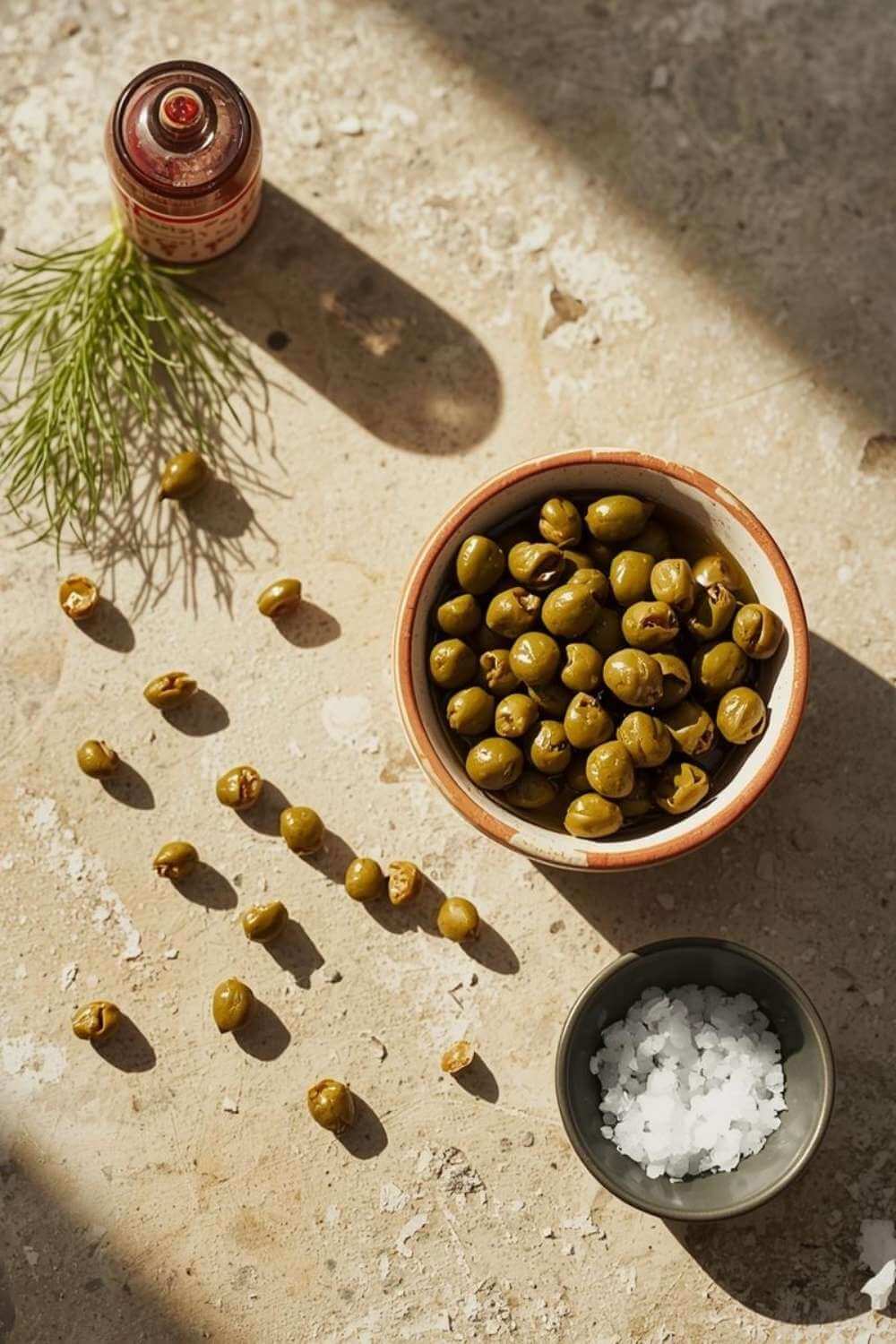
There’s a small jar sitting in the back of most Mediterranean kitchens — half-forgotten, used as a garnish, never taken seriously. A few salty little buds scattered over salmon or pasta, nothing more.
I used to do exactly this. Capers were a condiment, not a food. I’d add six of them to a salad and feel vaguely Mediterranean without thinking much about it.
Then I started researching quercetin — the anti-inflammatory flavonoid that shows up in nearly every conversation about inflammation, histamine, and hormone balance. I kept seeing the same number: 234mg per 100 grams. The richest natural food source. And the food it was attached to every single time was capers.
Quick factCapers contain more quercetin per gram than apples, red onions, or broccoli — the foods most people associate with this anti-inflammatory compound. The gap isn’t small. Capers contain over 70 times more quercetin than broccoli, gram for gram.
Once I understood that, I stopped treating capers like a garnish. Here’s what I learned — and the Greek recipe that became a permanent part of my weekly rotation.
What Capers Actually Are
(Most People Don’t Know)
Capers aren’t fruits, seeds, or pickled vegetables. They’re the unopened flower buds of Capparis spinosa — a thorny Mediterranean shrub that grows wild along rocky coastlines, stone walls, and the ancient ruins of Greece, Italy, and North Africa.
The buds are harvested by hand before they open, then cured — either salt-packed or preserved in brine. It’s the curing process that develops their characteristic sharp, briny, almost floral intensity. And interestingly, it’s also the curing process that concentrates their quercetin content even further.
People have been eating them for a very long time. Archaeological evidence traces caper consumption back 10,000 years — from Mesolithic deposits in Syria to Stone Age cave dwellings in Greece and Israel. In traditional Greek medicine, capers were used for everything from rheumatism to liver support. Ancient wisdom that modern biochemistry is now catching up with.
The Quercetin Story:
Simple and Worth Understanding
Quercetin is a flavonoid — a plant pigment found in the colourful parts of fruits and vegetables. It’s one of the most studied compounds in food science, primarily because of something it does to a specific inflammation pathway in the body.
When your body encounters a threat — infection, stress, a food it doesn’t tolerate — it activates a protein called NF-κB (nuclear factor kappa B). Think of NF-κB as the inflammation switch. When it fires, it triggers the release of pro-inflammatory chemicals that cause swelling, pain, fatigue, and a cascade of hormonal disruption downstream.
Quercetin is one of the few dietary compounds shown to directly suppress NF-κB activity. It essentially helps keep the inflammation switch in a calmer default state — not off entirely, but not stuck in overdrive either.
For women specifically — and this is why it matters so much in the context of keto Mediterranean eating — chronic low-grade inflammation is one of the primary drivers of hormonal disruption. When inflammation is elevated, it competes with normal hormone signalling. Cortisol stays elevated. Progesterone production is suppressed. Thyroid conversion is impaired. Quieting the inflammatory background noise is one of the most effective things you can do for your hormones — and it starts with what you eat every day.
The Histamine Connection
There’s another reason quercetin is particularly relevant for women on a keto Mediterranean approach: histamine. Many women dealing with anxiety, sleep disruption, or hormonal fluctuations are also dealing with histamine intolerance without knowing it — and quercetin is a natural mast cell stabiliser, meaning it helps prevent the excessive histamine release that triggers those symptoms.
This is a connection I rarely see discussed in the wellness space, but it’s biochemically significant. Eating quercetin-rich foods regularly — and capers give you the highest dose of any food — creates a consistent dietary background of histamine regulation alongside the anti-inflammatory effects.
Capers vs Other Quercetin Sources
Here’s why the numbers matter in practice:
| Food | Quercetin per 100g | Keto-friendly? |
|---|---|---|
| Capers (raw) | ~234 mg | Yes |
| Dill (fresh) | ~55 mg | Yes |
| Red onion | ~35 mg | In moderation |
| Kale | ~23 mg | Yes |
| Apple (with skin) | ~5 mg | No — too high-carb |
| Broccoli | ~3 mg | Yes |
Notice what this means practically: apples and onions are the foods most people associate with quercetin. Both are limited or excluded on a keto approach. Capers give you a dramatically higher dose with virtually zero net carbs. For anyone eating keto Mediterranean, they’re not just a good source of quercetin — they’re essentially your primary source.
Keto noteA typical serving of capers (2 tablespoons / ~17g) contains less than 0.5g net carbs. You get meaningful quercetin from even a small daily serving — no need to eat large quantities.
How to Actually Use Them
(Beyond a Garnish)
The quercetin in capers is best preserved when eaten raw or at low heat — avoid sautéing them until deeply brown, as high heat degrades the flavonoid content. Rinsing before use reduces the sodium from brine without significantly affecting the quercetin.
In practice, this means adding capers near the end of cooking, scattering them raw over salads, or using them in cold preparations like the recipe below. The Santorini tradition of eating caper salad — just capers, tomatoes, olive oil, and salt — is as simple as it gets. And it delivers a genuinely significant quercetin dose in a few forkfuls.
Authentic Greek Recipe — Keto Mediterranean
Santorini Caper Salad
(Kapari Salata)
A traditional Cycladic preparation — honest, elemental, anti-inflammatory
The Story
On Santorini, capers grow wild from the volcanic rock — the mineral-rich soil produces a particularly pungent variety. The local salad is nothing elaborate: capers, sun-dried or fresh tomato, olive oil, maybe a sliver of red onion. It’s a perfect example of the Mediterranean principle that the best food is often the simplest. I’ve adapted it slightly with cucumber and fresh herbs to make it more substantial as a side.
Ingredients
- 3 tablespoons capers, rinsed and drained (salt-packed preferred, or brine-packed)
- 1 medium tomato, diced (or 6–8 cherry tomatoes, halved)
- ½ small cucumber, diced
- ¼ small red onion, very thinly sliced
- 2 tablespoons extra-virgin olive oil (good quality — this matters)
- 1 teaspoon red wine vinegar
- Small handful fresh flat-leaf parsley, roughly chopped
- Fresh or dried oregano, to finish
- Black pepper, freshly ground
- Optional: a few anchovy fillets, or crumbled keto-friendly feta
Method
- If using salt-packed capers, soak in cold water for 10 minutes, then drain and pat dry. Brine-packed capers just need a rinse.
- Combine tomato, cucumber, and red onion in a bowl. Let them sit for 5 minutes with a small pinch of salt — this draws out the juices and creates a natural dressing base.
- Add capers to the bowl. If they’re large, you can roughly chop them — this releases more quercetin into the dressing.
- Whisk together olive oil and red wine vinegar, pour over the salad. Toss gently.
- Scatter parsley over the top. Finish with a pinch of dried Greek oregano and freshly ground black pepper.
- Let it sit for 5 minutes before serving — the flavours settle and deepen. Serve at room temperature, never cold.
Lina’s note The key to this salad is the olive oil — use the best quality EVOO you have. This is a salad where the oil is not background flavour, it’s the sauce. A good Greek or Spanish EVOO with low acidity makes a real difference here. And if you can find salt-packed capers from Santorini or Pantelleria, the flavour is on another level entirely.
Approximate Nutrition Per Serving
Other Ways to Eat Capers
On a Keto Mediterranean Diet
Once you start thinking of capers as a serious ingredient rather than a garnish, they appear everywhere in Mediterranean cooking — and most of those applications are naturally keto-compatible:
With eggs: Scrambled or fried eggs with capers, olive oil, and fresh dill is a standard Greek island breakfast. Quick, high quercetin, genuinely good.
Over fish: Scatter rinsed capers over baked salmon or sardines in the last 5 minutes of cooking. The heat is low enough to preserve most of the flavonoids, and they pair perfectly with oily fish.
In tuna salad: Replace pickles or relish with rinsed capers in a Greek-style tuna salad — tuna, olive oil, capers, lemon, parsley. No mayo needed.
In a dressing: Blend capers into a vinaigrette with olive oil, lemon, garlic, and a little mustard. This is essentially a rough salsa verde — use it over roasted vegetables, grilled chicken, or lamb.
Salt-packed vs brine-packed: Salt-packed capers (the kind that need soaking) tend to have a more complex, floral flavour and are preferred by Greek and Sicilian cooks. Brine-packed are more convenient and still deliver the quercetin benefits — just rinse before using.
Free download
Want a 5-day plan that puts all of
this into practice from day one?
The 5-Day Keto Mediterranean Reset includes meal plans, shopping lists, and 15 anti-inflammatory air fryer dinners — free.
Get the Free Reset PlanThe Short Version
Capers are not a garnish. They are the single richest food source of quercetin — an anti-inflammatory compound that suppresses the NF-κB inflammation pathway, stabilises histamine release, and supports the hormonal environment that most women eating keto Mediterranean are actively trying to restore.
They’re also virtually zero-carb, deeply embedded in Greek culinary tradition, and genuinely delicious when prepared with care. If you’re eating keto and limiting or avoiding apples and onions — the foods most people think of for quercetin — capers become one of the most important ingredients in your kitchen.
A small jar goes a long way. Start with the salad above. Then start noticing where they belong in everything else you cook.
Anti-Inflammatory Ingredient Series